

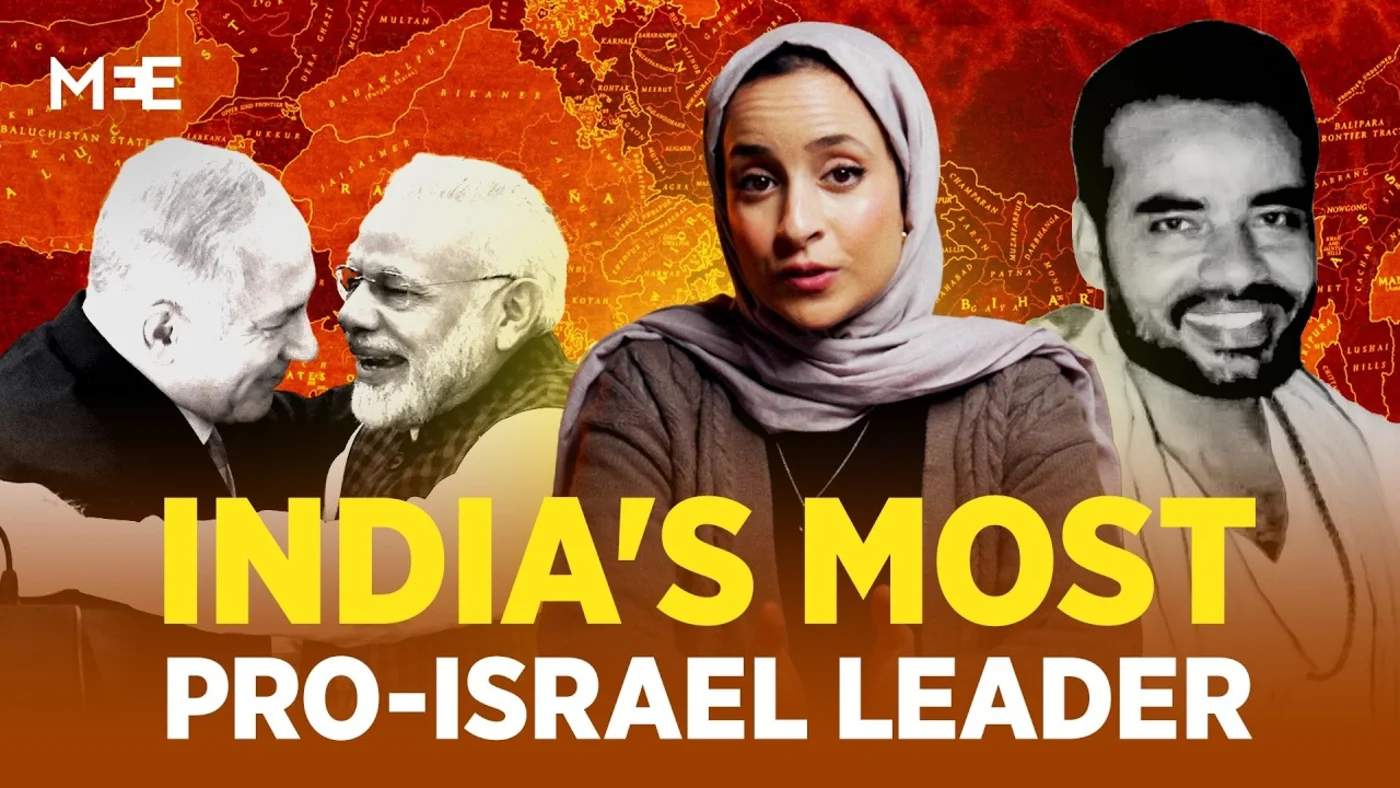
Narendra Modi: India’s most pro-Israel leader
Published date: 26 February 2026 15:34 GMT
|
Last update: 1 week 4 days ago
As India’s Prime Minister Narendra Modi visits Israel, the relationship between Modi and Netanyahu has never been deeper.
Since taking office in 2014, India and Israel have grown closer, not just as strategic partners, but through a shared worldview.
Modi is considered to be the first leader to call Netanyahu in the hours following the Hamas-led attacks of 7 October 2023, a move that would set the tone for India’s support for Israel’s genocide in Gaza.
In Netanyahu, Modi saw someone like himself, a populist leader of an ethno-religious state built on military strength. Whilst in power, Modi mirrored the Israeli model, advancing Hindu nationalism at home and weaponising the “war on terror” in Kashmir.
So how did Modi rise to power, and how did India become Israel’s closest ally in the region?
Since taking office in 2014, India and Israel have grown closer, not just as strategic partners, but through a shared worldview.
Modi is considered to be the first leader to call Netanyahu in the hours following the Hamas-led attacks of 7 October 2023, a move that would set the tone for India’s support for Israel’s genocide in Gaza.
In Netanyahu, Modi saw someone like himself, a populist leader of an ethno-religious state built on military strength. Whilst in power, Modi mirrored the Israeli model, advancing Hindu nationalism at home and weaponising the “war on terror” in Kashmir.
So how did Modi rise to power, and how did India become Israel’s closest ally in the region?
Middle East Eye delivers independent and unrivalled coverage and analysis of the Middle East, North Africa and beyond. To learn more about republishing this content and the associated fees, please fill out this form. More about MEE can be found here.