
Israel bans Friday prayers at Al-Aqsa Mosque despite Purim celebrations proceeding

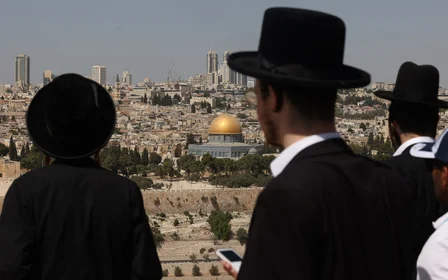
Israel has banned Friday prayers at Al-Aqsa Mosque, citing the “security situation” amid the war with Iran, while Jewish Purim celebrations have been allowed to take place elsewhere in the city.
Palestinians accuse Israel of using the war as a pretext to empty Al-Aqsa Mosque of worshippers, particularly during Ramadan, when tens of thousands of people would normally gather at the site.
Aouni Bazbaz, director of international affairs at the Islamic Waqf, which administers Al-Aqsa Mosque, said the closure could have serious consequences.
“The continued closure of Al-Aqsa Mosque for a prolonged period, particularly at a time when signs of normal life are returning elsewhere, could carry risks and future consequences that cannot be ignored,” he told Middle East Eye.
Bazbaz warned that keeping the mosque closed for extended periods could “heighten tensions and public anger”, potentially affecting stability in the region.
New MEE newsletter: Jerusalem Dispatch
Sign up to get the latest insights and analysis on Israel-Palestine, alongside Turkey Unpacked and other MEE newsletters
“The persistence of this situation could also set a dangerous precedent, making the closure of places of worship something that can be repeated more easily in the future,” he added.
“The occupation authorities appear to be creating a new reality regarding access to Al-Aqsa Mosque through the prolonged closure.”
Israel closed Al-Aqsa Mosque and Jerusalem’s Old City shortly after launching its war on Iran on Saturday.
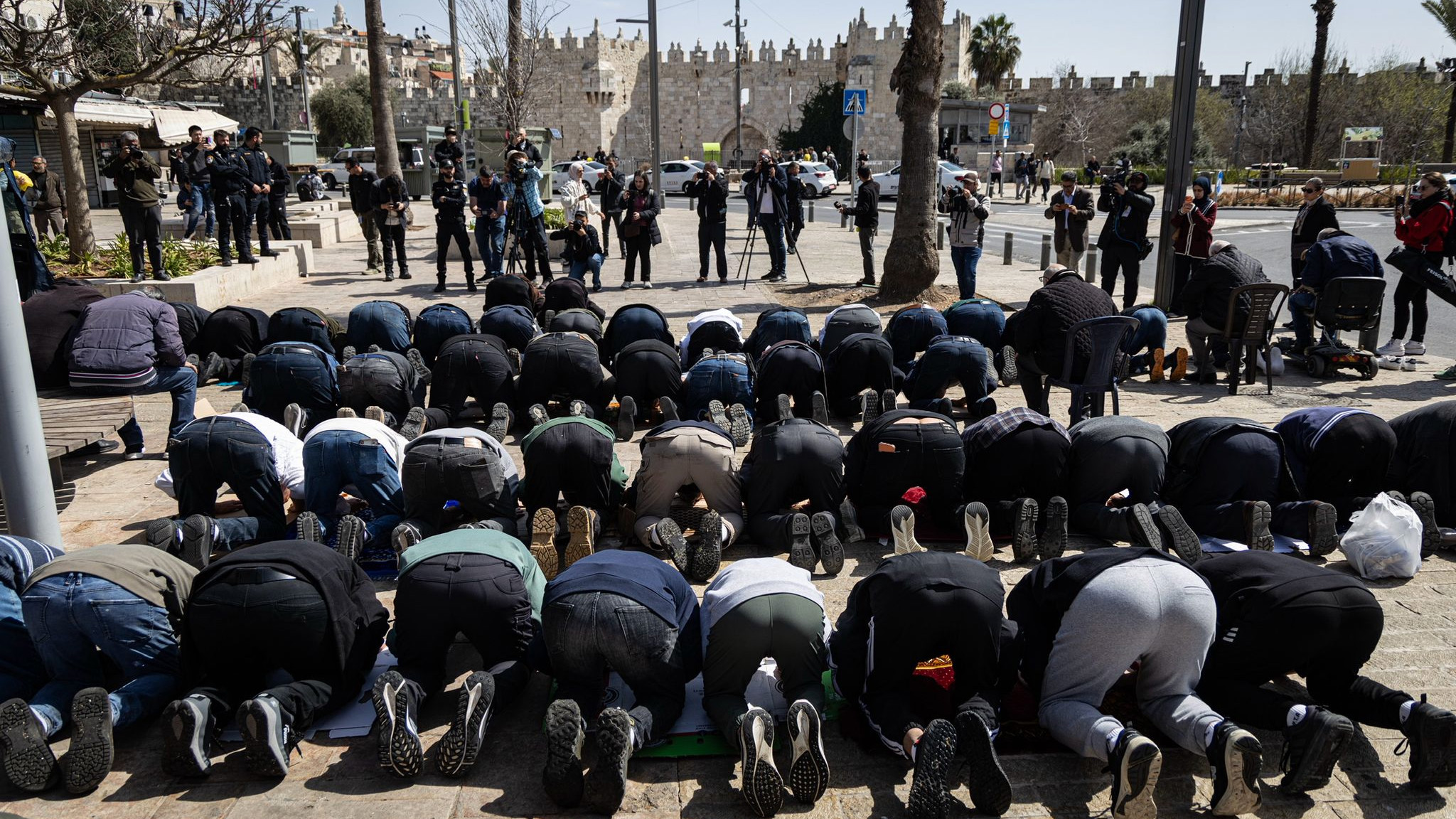

The unprecedented move during the holy month of Ramadan has been justified by Israeli authorities as a precautionary measure amid the conflict.
Only a small number of Al-Aqsa staff have been allowed to enter the mosque's complex. Access to the Old City has largely been restricted to residents and shopkeepers, with Israeli forces deployed at the city’s gates preventing non-residents from entering.
During Ramadan, the Old City and the mosque are typically crowded with thousands of Palestinian worshippers.
Yet while the area has largely been emptied, large gatherings of Israelis celebrating the Purim holiday have been permitted elsewhere in the city.
'We have been prevented from reaching Al-Aqsa, yet people are still in the streets and the markets'
- Fakhri Abu Diab, Jerusalem-based activist
Fakhri Abu Diab, a Jerusalem-based activist and expert on the city’s affairs, said the public safety justification for closing the mosque was a lie.
“The police and the government do not care about protecting us, and there are no bomb shelters for Palestinians in Jerusalem,” Abu Diab told MEE.
He said the objective of the closure was to empty the mosque, push Palestinians away, and prevent them from exercising their right to worship, especially during Ramadan.
“We have been prevented from reaching Al-Aqsa, yet people are still in the streets and the markets,” Abu Diab said.
“The shops are open, institutions are operating and daily life continues as normal. Meanwhile, the place that offers spiritual safety and is not even a target is the one that has been closed.”
Abu Diab said the goal was to impose a new reality at the mosque, whereby Israel decides when the site can be opened or closed.
Temporary becoming permanent
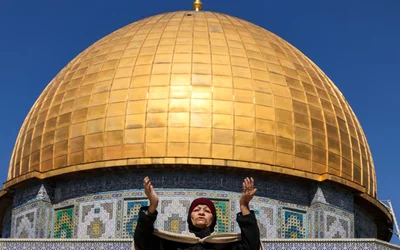
Al-Aqsa Mosque has long been governed under an international arrangement preserving its religious status as an exclusively Islamic site.
Under this status quo, the administration of the site, including control over access, falls to the Islamic Waqf in Jerusalem, the Jordanian-appointed religious endowment responsible for managing the mosque complex.
However, since Israel’s occupation of East Jerusalem in 1967, Palestinians say this arrangement has been gradually eroded through increasing restrictions on Muslim access while Jewish presence and Israeli control have expanded.
Israel’s control over East Jerusalem, including the Old City, violates several principles of international law, which stipulate that an occupying power has no sovereignty over the territory it occupies and cannot make permanent changes there.
The Islamic Waqf has yet to issue an official statement regarding the recent closure.
However, Bazbaz told MEE the measures have already raised concerns about long-term change.
“This has fuelled fears that what is presented as a temporary measure could gradually become a permanent or semi-permanent arrangement, particularly if people become accustomed to the restrictions or if patterns of access to the site are altered,” he said.
Ziad Ibhais, a researcher specialising in Jerusalem affairs, told MEE the closure is part of an Israeli effort to marginalise the Islamic role at the site, reducing the Waqf to “the position of a spectator; a passive recipient of whatever measures are imposed by Israel”.
He added that it also aims to “isolate the mosque from its Muslim worshippers” as a “live rehearsal for the possibility of sealing it off and seizing it at any other time”.
Middle East Eye delivers independent and unrivalled coverage and analysis of the Middle East, North Africa and beyond. To learn more about republishing this content and the associated fees, please fill out this form. More about MEE can be found here.
.jpg804a.webp?itok=2QgBMXz4)
.jpga24c.webp?itok=nlbfp-n4)